































Features

Integrations and connections
In order to stimulate new and growing businesses the Spanish government has decided to implement electronic invoicing via the FACe & FACeB2B systems.
Furthermore, the e-reporting obligation is being expanded with Veri*factu in addition to the existing SII system.
Find out below what the regulations are for sending and receiving Spanish e-invoices and how you can comply with e-reporting in Spain.

In addition to the e-invoicing obligation, Spain is also implementing mandatory e-reporting. All companies that issue e-invoices in Spain must use either the SII or Veri*factu system as of 1 January 2026.
Large companies with an annual turnover over €6 million will need to use SII. Small businesses can choose between either SII or Veri*factu. If companies are already using SII they don't need to use Veri*factu for e-reporting as well.
E-invoicing in Spain is mandatory for businesses who need to send invoices to and receive invoices from local, regional and central governments.
B2G (Business-to-Government) e-invoicing has been mandatory since 2017. The obligation applies to suppliers who need to send invoices above € 5.000 to the government.
For B2B (Business-to-Business) e-invoicing a decree was established in February 2024 to mandate exclusive e-invoicing for for businesses.
It is expected that, as of 2027, large tax payers with an annual turnover of at least € 8 million will need to comply with mandatory e-invoicing. For all other tax payers, the deadline will be no sooner than 2028.
SII stands for "Suministro Inmediato de Información". It is a real-time VAT reporting system in Spain that sends invoice data directly to the Spanish tax authority. It has been mandatory for large businesses (with an annual turnover of at least € 6 million) since 2017. Even though SII was originally intended to streamline VAT reporting for large businesses small companies can use it as well.
Veri*factu is designed to combat tax fraud in Spain by allowing invoices to be sent directly to the Spanish Tax Agency (AEAT). Veri*factu ensures that each invoice is authentic and cannot be manipulated. It is focused on small businesses and self-employed people. Small companies are, however, free to choose between Veri*factu or SII to comply with mandatory e-reporting by January 2026.
No, you only need one system for e-reporting. Small companies can choose between Veri*factu and SII. Large enterprises, however, are obliged to use SII.
If you are not sure which system applies to your company, SII is the safest option.
FACe and FACeB2B are both used for e-invoicing in Spain where FACe is used to send e-invoices to the Spanish government and FACeB2B is only used to send e-invoices to companies in Spain.
FACe is mandatory but FACeB2B is not. You can also use Peppol instead of FACeB2B.
No, e-invoicing is not yet mandatory in Spain but it will be, probably in 2027. For now, you can also use other methods such as email.
It is recommended to check with your customers and suppliers how they want to exchange invoices.
Electronic invoices in Spain need to be sent in the Facturae format, a type of XML file that contains an eSignature. All B2G e-invoices must be sent through FACe, the free entry point from the government.
Spanish companies can use the separate FACeB2B platform to exchange e-invoices.
You can upload and manage your invoices directly in FACe or you can use an access point such as Billit. This way, you can create and send invoices in the right format in just minutes and safely receive invoices from the Spanish government.
Creating a Billit account and sending your first e-invoice only takes a few minutes.

If you want to send or receive e-invoices from Spain, you need to connect with the FACe platform directly, or via an access point such as Billit.
Follow the steps below to register on Billit and send your first invoice.

In order to send your first Spanish invoice, you need to connect to FACe (B2G) or FACeB2B (B2B).
If you need to send an invoice to the Spanish government you will need to include 3 additional fields as well:
In the 'Customers' menu on the left click on 'Additional fields' and add the fields above. Read more about adding extra fields in this help article.
You can find the details for these fields in the Spanish Directory of Organisations as well. If you are unsure about which department details to use, please check this with your contact person.
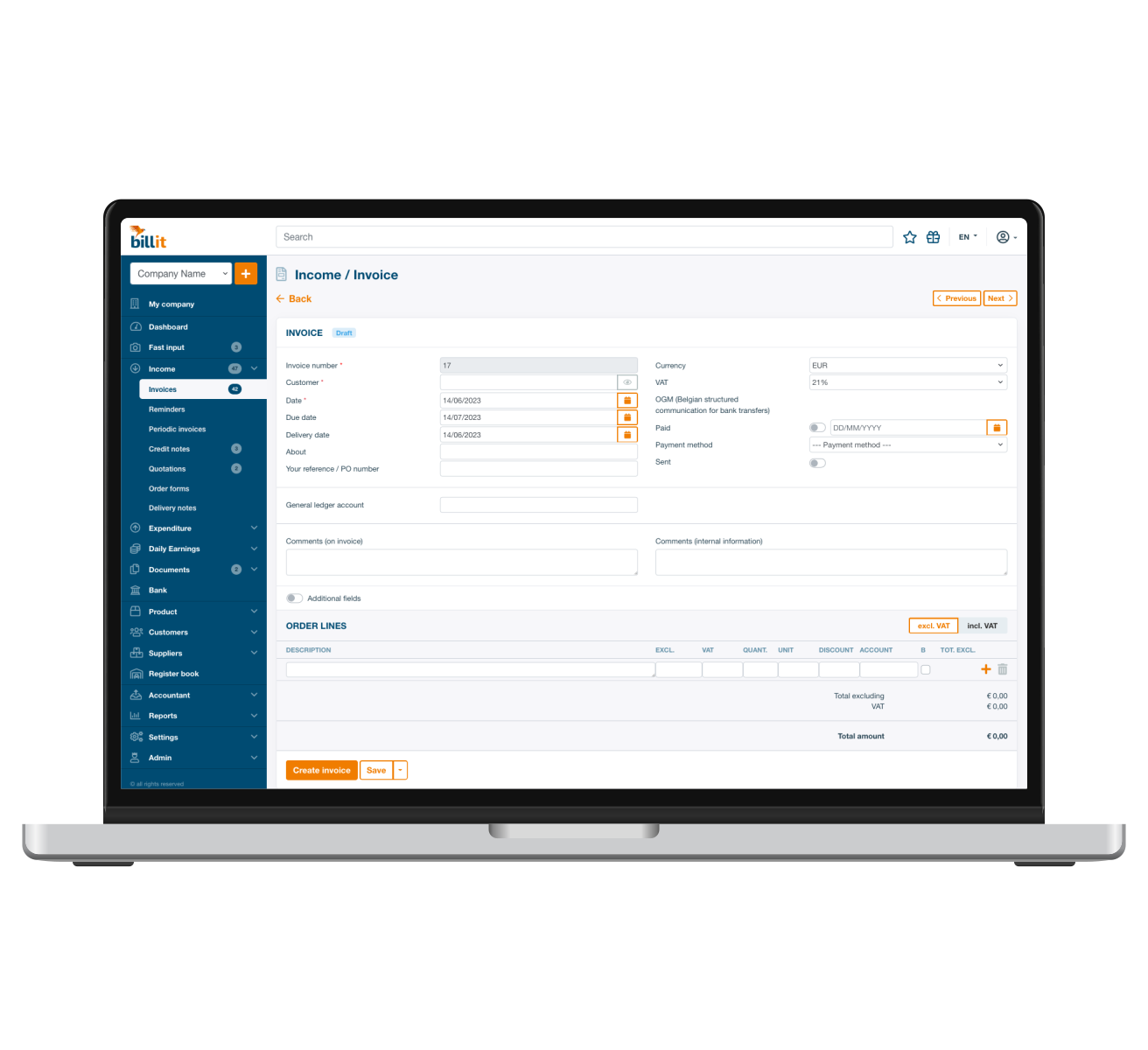

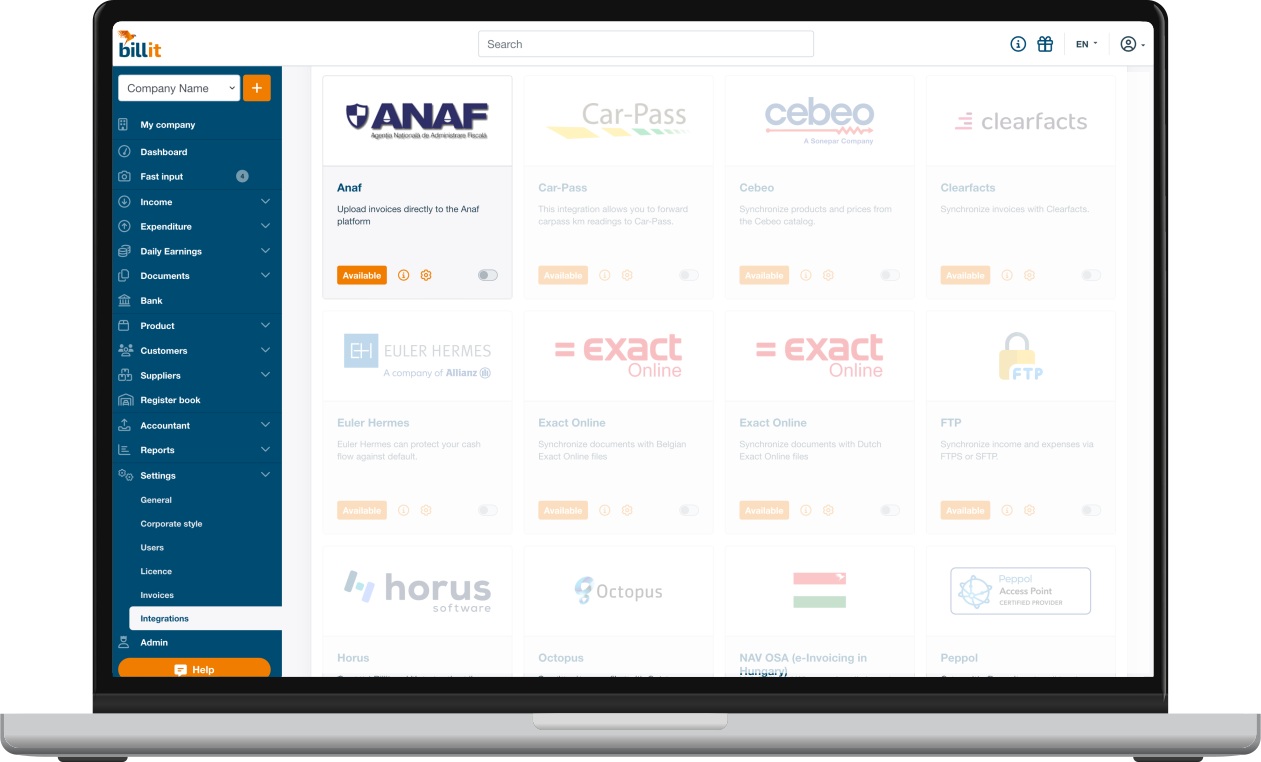
Billit takes care of your connection with FACe. In just a few steps, you can link the integration.

Your invoices are automatically converted in the required Facturae format. That means you don't have to retype anything and all your invoices will meet the required standard as soon as you create them.

The identity of everyone affiliated with the network is verified, so you can be sure that the invoices you receive are genuine, and you avoid invoice fraud.

The invoices you send through the network are completely digital, so you can process them automatically in your invoicing software.

Create your invoice and send it immediately via FACe. Combined with automatic processing, this will save a lot of time.

Submit invoice data in XML format directly to the Spanish tax authorities via SII. Suitable for both large enterprises and small businesses.
There are many kinds of identifiers you will need to send invoices to Spain. Find out the difference between each option below.
| Type | Description | Example |
|---|---|---|
| NIF (Número de Identificación Fiscal) | The NIF number consists of 'ES' followed by the CIF number. CIF is the tax ID number that identifies a company or legal entity in Spain. | ESQ5018001G |
| GLN | Stands for Global Location Number. It is used by companies to identify their locations, such as legal entities, functions and physical or digital locations. You can request a GLN number with GS1. | 5488888010598 |

