

































Features

Integrations and connections

If you’re a supplier of goods or services, it is standard practice for you to issue and send invoices to your customers. However, it is also possible the other way around This is known as self-billing. Why would you do that, what are the conditions, and how can you complete this process digitally via Peppol?It’s all explained in this blog!
 3 min reading time
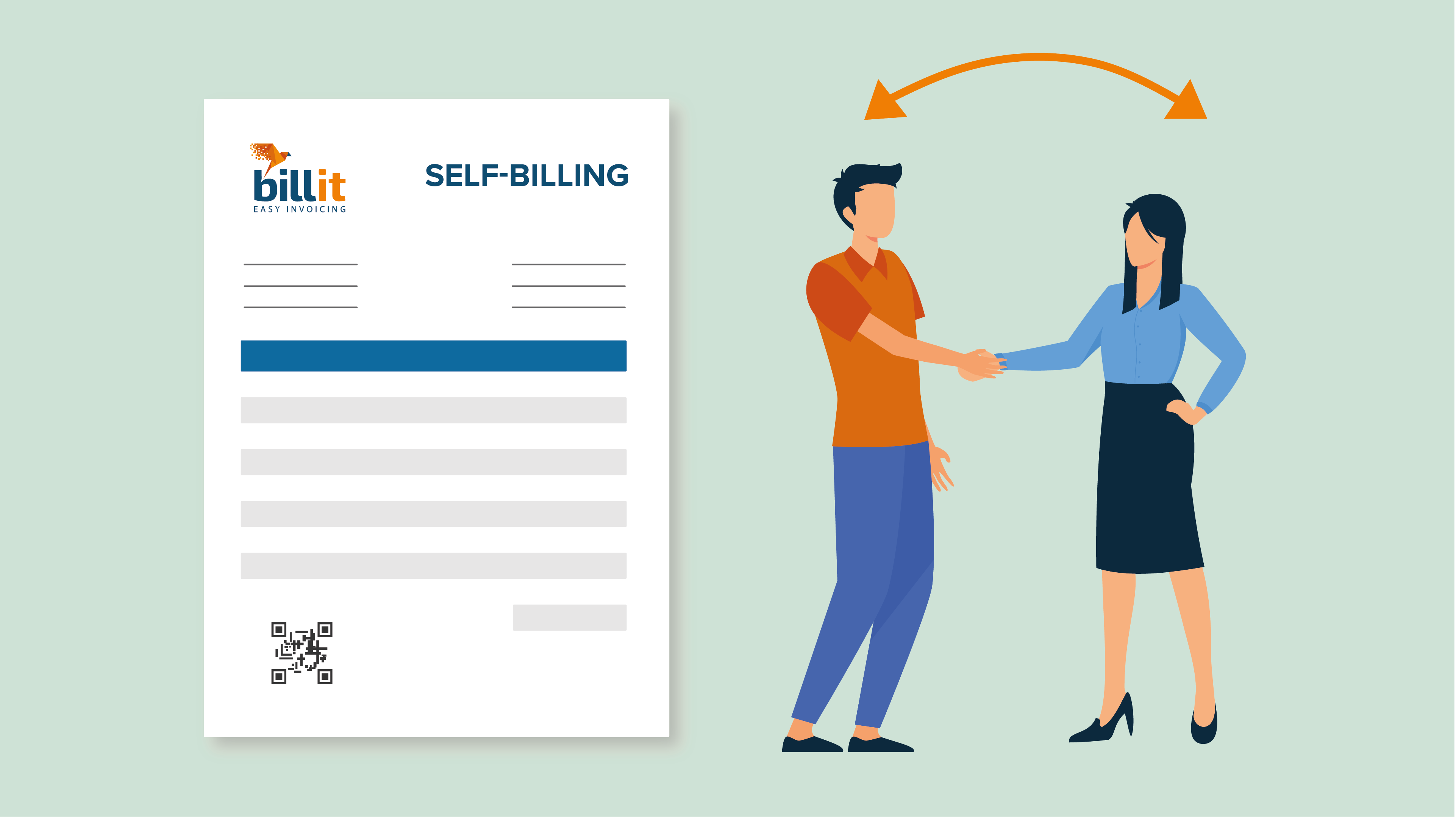
Self-billing is an invoicing process involving a customer creating invoices in the name of their suppliers. This means that the customer creates the invoices that they will pay themselves, effectively taking some of the administrative work off their suppliers’ hands and, in some cases, enabling them to work more efficiently.
Self-billing is sometimes also called reverse billing or self-invoicing. The legal term for a self-billing invoice is an 'invoice issued by the customer'.
In Belgium, the statutory rules for self-billing are described in Circular AAFisc. No. 53/2013 issued by FPS Finance.
Businesses may decide to use self-billing to streamline their invoicing processes. It can save time, reduce errors and simplify automation. Businesses that decide to use self-billing often have regular suppliers and work with highly standardised transactions.
An example would be a business with solar panels on its roof that sells any surplus electricity it generates to an energy company. In that case, it is easier for the energy company (the customer) to issue invoices than for the business that has produced the electricity (the supplier). The customer has all the necessary information and expertise to create these invoices quickly and correctly, whereas this is more difficult for the supplier. In such cases, self-billing is a good idea, especially since it won’t just be a one-off sale of electricity.
There are two basic conditions for self-billing:
Once both parties have agreed to self-billing and the procedure has been established, the customer can start issuing self-billing invoices to its supplier.
Self-billing invoices must contain the same elements as standard invoices.
All self-billing invoices must also contain the following mandatory statement:
'Invoice issued by the customer'
The numbering is also slightly different. Sales invoices should normally be issued consecutively without interruption, but this is not possible with self-billing invoices as they would disrupt the regular numbering sequence. For this reason, you must set up separate, sequential numbering for each supplier.
E-invoicing via Peppol will be mandatory in Belgium from 1 January 2026. This applies to the exchange of all invoices between VAT-registered businesses, including self-billing invoices.
This is easy if you use Billit as it allows you to set up self-billing via Peppol.
In any case, suppliers can receive self-billing invoices via Billit. If you want to issue self-billing invoices as a customer, you will first need to activate 'Self-billing' in the settings.
More information can be found on our help pages:
 Back to overview
Share


