

































Features

Integrations and connections

Did you know that there are certain cases where, as a supplier, you should not charge VAT, and your customer is responsible for reporting the VAT themselves? That mechanism is called reverse charging VAT. In practice, this most often occurs in Belgium for works relating to immovable property, such as painting, roofing or renovation work. In that case, we call it co-contractor VAT, the form of the reverse charge that Belgian entrepreneurs use most often. How exactly does co-contractor VAT work, when can you apply it, and how do you state it correctly on your invoice? Find out in this article!
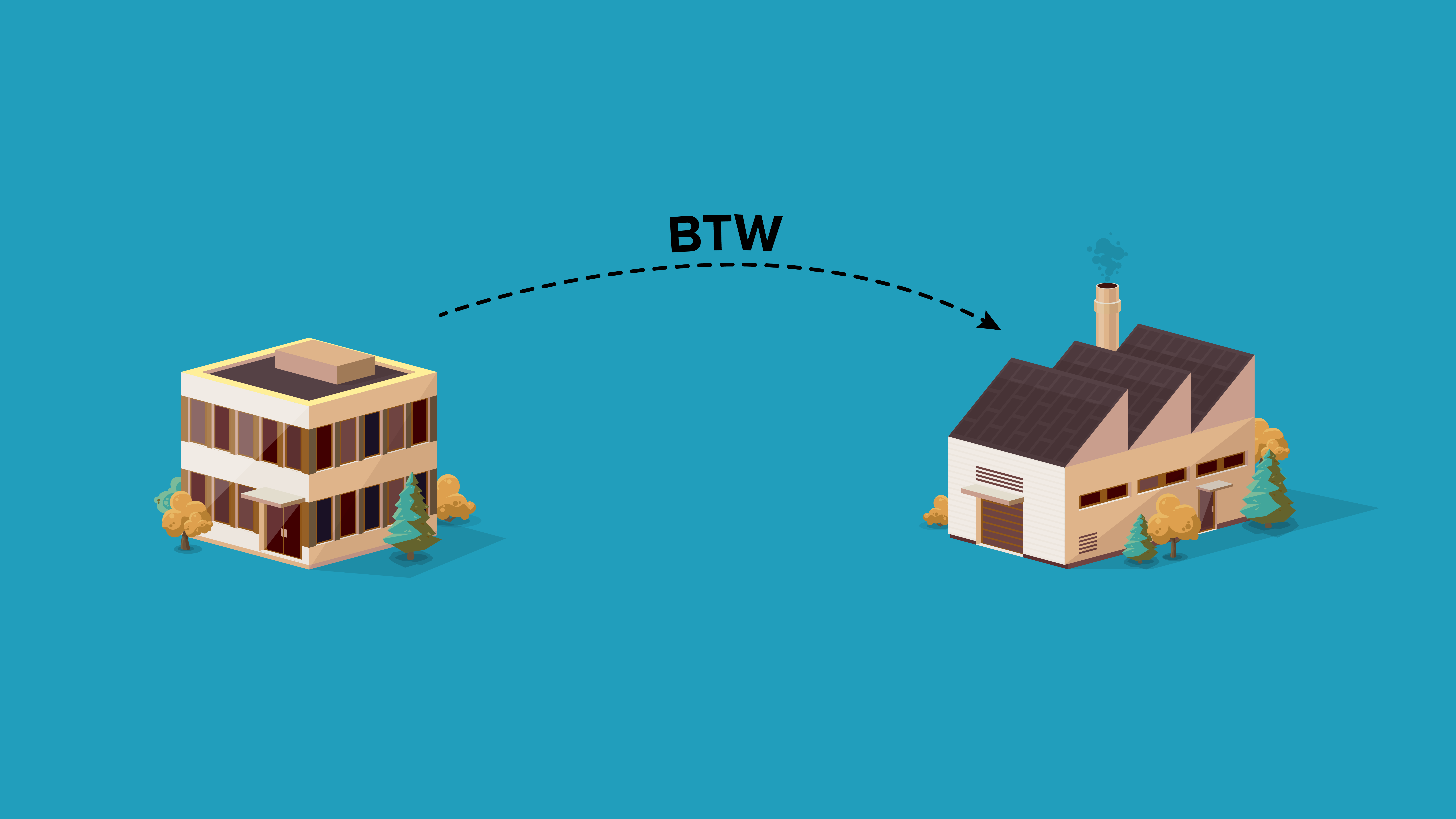
Normally, a supplier will simply charge VAT on the invoice and then remit that VAT to the tax authority. Your customer can then claim that VAT back using their own VAT return, to the extent that it is deductible.
When the VAT is reverse charged, you turn that mechanism around. You don’t charge any VAT, and your customer reports the VAT owed directly on their own VAT return. In other words, the responsibility is shifted or ‘reversed’ from you to your customer. This reverse charge is used in inter-Community trade, but in Belgium you are most likely to encounter it if you are a VAT co-contractor in the construction sector.
You can’t just reverse charge the VAT to any customer you like. The conditions vary depending on the VAT rules that apply. In Belgium, the VAT reverse charge mainly occurs in three situations:
● Co-contractor VAT: you are a co-contractor who does 'works relating to immovable property', such as renovations.
● Intra-Community services: for example, you give a lecture in France at a French company.
● Intra-Community goods: for example, you sell clothing to a Dutch store.
Wondering exactly which situation you’re in? In Belgium, the VAT reverse charge occurs in three situations. Here are the most common situations for entrepreneurs:
| Situation | When is this relevant? | What do you need to watch out for? |
|---|---|---|
| Co-contractor VAT | Applies to work on a building or site, such as renovation, roofing or painting work, in the construction sector | Whether the work is effectively categorized as ‘works relating to immovable property’, what the building is used for, and whether your customer is VAT registered with a periodic VAT return |
| Intra-Community services | Applies when you supply a service to a VAT-registered business in a different country in the EU. | Where the service is considered to take place according to the VAT rules, and whether your customer’s VAT number is valid |
| Intra-Community goods | Applies when you sell goods to a VAT-registered business in a different country in the EU. | Whether the goods are also effectively transported to that member state, and whether you have checked the VAT number using VIES |
Do you have a customer in a different country in the EU? Do a quick check using VIES, the European Commission database, to find out whether your customer has a valid VAT number. If they don’t, just charge VAT as normal, as you would if your customer was a private individual.
What exactly is a co-contractor? Simple: it’s your customer, who becomes responsible for the VAT on the invoice instead of you. As a contractor, you won’t account for the VAT. Your customer will do so through their own VAT return. You can recognise this system by the mandatory reference to the reverse charge on the invoice.
Reverse-charged VAT is the general term: whenever the VAT reporting obligations are shifted from the supplier to the customer, you call it reverse-charging the VAT. Co-contractor VAT is one application of this mechanism, specifically for works relating to immovable property in the construction sector, including work done by subcontractors. In short: all co-contractor VAT is reverse-charged VAT, but not all reverse-charged VAT is co-contractor VAT.
As a contractor or subcontractor, you can only reverse charge the VAT if you meet these three conditions:
● You are invoicing for works relating to immovable property, such as building, renovation or finishing work on a building or site.
● The building is used for professional purposes, fully or partly (in the case of mixed use).
● Both parties are VAT-registered, and your customer files periodic VAT returns.
The same logic applies to subcontractors in the construction sector: if a customer files periodic VAT returns, you can reverse charge the VAT.
Put simply, anything you build, install or attach to a building.Here are a few typical examples:
● Painting and plastering
● Work on roofs and façades
● Flooring and tiling
● Electrical work that is part of the building, such as the installation of an electric charging station
● Bathroom and toilet fittings that are permanently attached to the building
● Renovation and maintenance work
● Demolition and earthworks
● Installing a driveway, patio or car park
It is at least as important to know when the mechanism doesn’t apply as when it does. In practice, this is often where mistakes creep in. You can’t usually apply co-contractor VAT to:
● The sale of a separate appliance or good without installation or permanent integration into the building
● Garden maintenance services only, such as mowing lawns or pruning plants, with no work on the building itself
● Services for a private customer who is not VAT registered
● Activities that are not related to a building or site
● Work done outside Belgium, where other local VAT rules apply
Does your customer use their building partly for private purposes and partly for their job? Be sure to check carefully exactly which part of the building the work is for.
● If it is for the entire building or the professional part, you can usually reverse charge the VAT.
● If it is exclusively for the private part, just charge VAT as normal, as you would for a private customer.
That distinction determines how to invoice them correctly, so if in doubt, always ask your customer or accountant.
Theory is one thing, but seeing how it works in practice is even more useful. Three situations to help you make the distinction quickly:
Example 1 | 100% professional use
You are a painter who repaints an office that is used exclusively for the business. Do you meet the other requirements too? If so, your invoice should not include VAT, and your customer will account for the VAT themselves.
Example 2 | Mixed use
You are a contractor working on someone’s house, which includes a home office. Check carefully whether the work is for the professional part, the entire building or a purely private area. That will determine how you should invoice it.
Example 3 | Not construction work
You are a supplier who sells an appliance but does not install it or integrate it permanently into the building. You shouldn’t be applying the logic of the co-contractor VAT system; instead, you should simply create an invoice using the normal VAT rules.
Are you invoicing under the VAT co-contractor mechanism? The old wording, ‘Btw verlegd volgens artikel 20 KB nr. 1’ should no longer be used.
Since 1 January 2023, you are obliged to include the following clause on your invoice:
'Verlegging van heffing. Bij gebrek aan schriftelijke betwisting binnen een termijn van één maand na de ontvangst van de factuur, wordt de afnemer geacht te erkennen dat hij een belastingplichtige is gehouden tot de indiening van periodieke aangiften. Als die voorwaarde niet vervuld is, is de afnemer ten aanzien van die voorwaarde aansprakelijk voor de betaling van de verschuldigde belasting, interesten en geldboeten.' This means: 'Reverse charge. If the recipient does not dispute the invoice in writing within a period of one month following its receipt, the recipient is considered to acknowledge that they are VAT registered and obliged to file periodic returns. If this condition is not fulfilled, the recipient is liable with regard to that condition for the payment of the tax owed, interest and fines.'
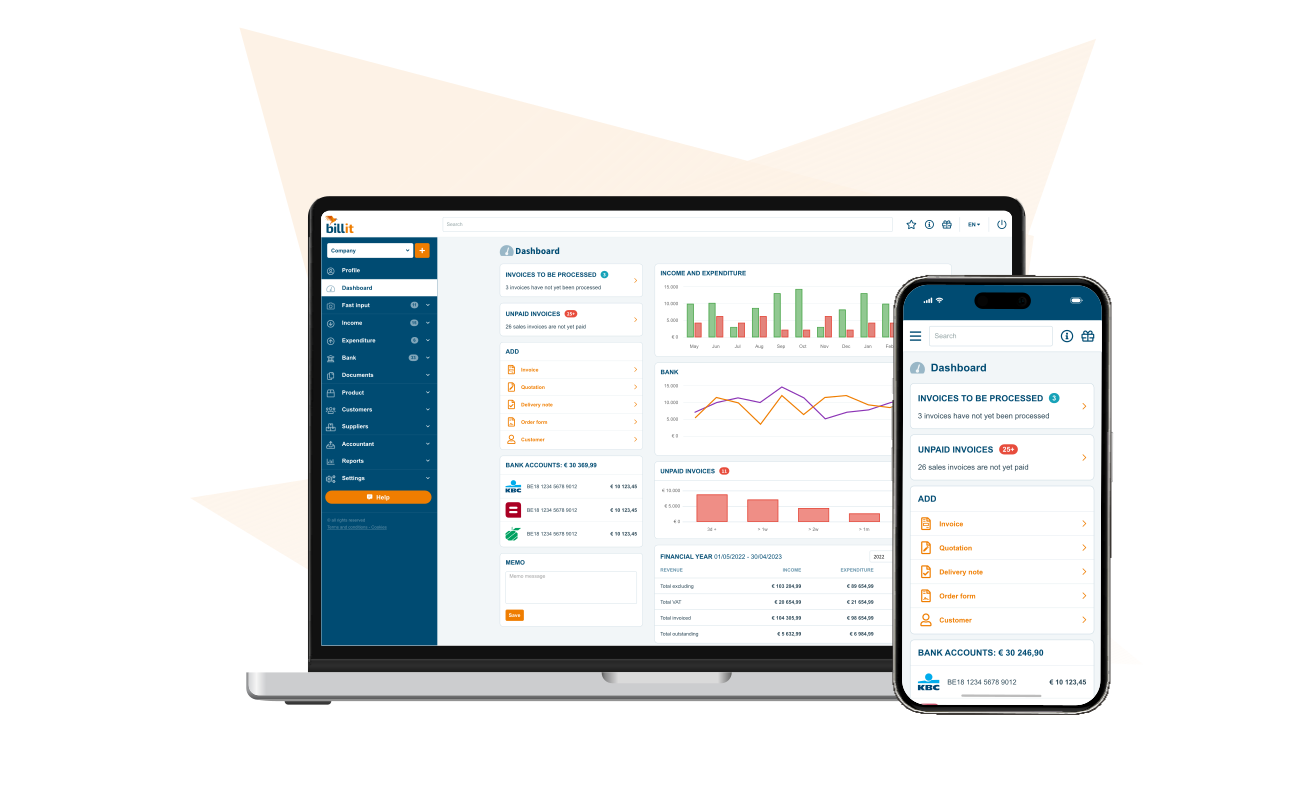
Reverse charging VAT sounds complicated, but it isn’t with Billit: your invoice will be ready in a couple of clicks.
Start by creating an invoice as usual.
● Are you selling goods or delivering services to a VAT-registered customer in a different EU country? Select the option 'IC goods’ or ‘IC services’ for the entire invoice. (IC stands for ‘intra-Community’.)
● Are you working as a co-contractor in the construction sector? Then simply select the option ‘co-contractor’.
In both cases, Billit will do the rest: the VAT rate is automatically set to 0%, and the correct invoice wording appears immediately on your invoice. It’s as simple as that!
More information? See the help page ‘VAT rates for sales invoices’.
Are you still unsure whether the VAT reverse charge applies? Give this checklist a quick run through before you click ‘Send’.
● Is it an activity that can be categorized as works relating to immovable property?
● Is the building used for professional or mixed use?
● Is your customer in the right VAT context for this mechanism?
● Have you described the activity clearly enough in your quote and invoice?
● Are you using the correct VAT option in your invoicing software?
● Is the correct invoice wording present on the document?
● For an EU customer: have you checked the VAT number in VIES?
 Back to overview
Share


